不结婚
Nanjing Massacre memorial hall receives new evidence of Japanese invasion on 81st anniversary of Japan’s surrender_我的网站

A |
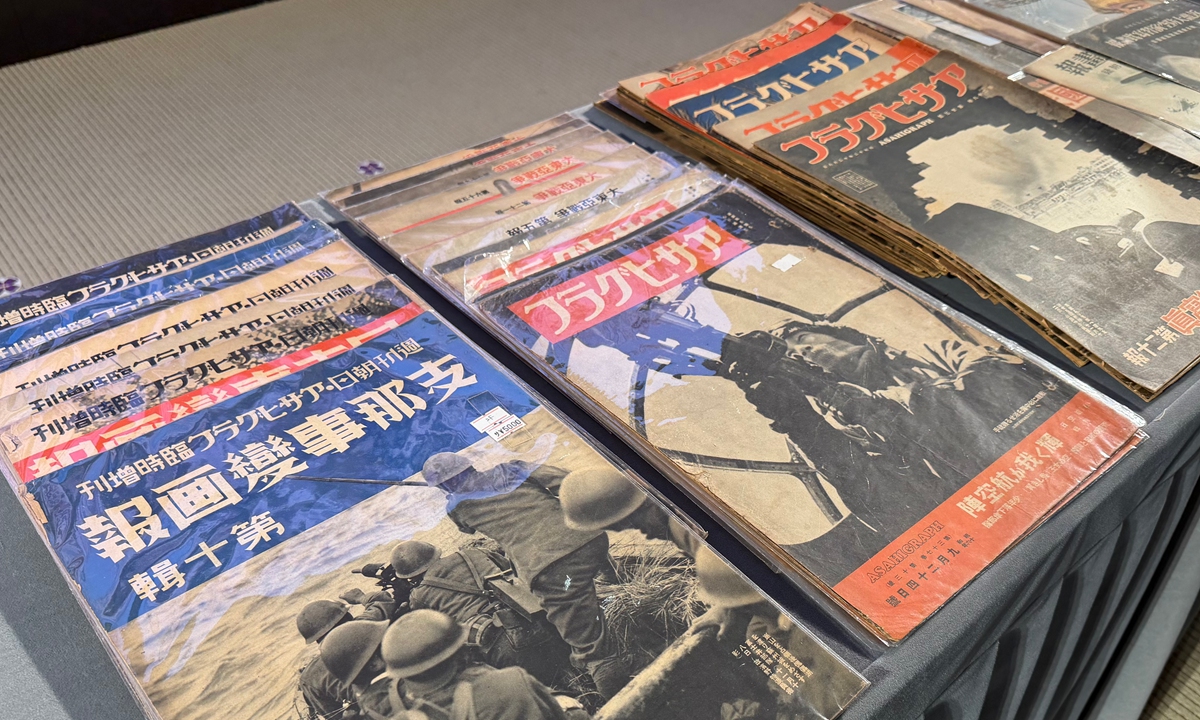
Illustrated materials related to Japan’s invasion of China, brought back from Japan by Marcus Detrez and Zhong Haosong, are displayed at the Memorial Hall of the Victims in Nanjing Massacre by Japanese Invaders in Nanjing, East China’s Jiangsu Province, on August 15, 2026. Photo: Shen Sheng/GT
August 15 this year marks the 81st anniversary of Japan’s unconditional surrender in World War II. A ceremony themed “Nanjing Will Never Forget” was held on Saturday at the Memorial Hall of the Victims in the Nanjing Massacre by Japanese Invaders in Nanjing, East China’s Jiangsu Province.
At the ceremony, a batch of newly acquired artifacts, historical materials, and documents related to the War of Resistance Against Japanese Aggression, including Japanese soldiers’ private letters, wartime postcards, educational materials on gas warfare, news compilations and French diplomatic archives, was officially added to the memorial hall's collection.
Overseas‑sourced historical archives drew wide attention among the donated materials. French youth Marcus Detrez, his compatriot Bastien Rata and Chinese youth Zhong Haosong jointly donated a set of historical documents on Japan’s aggression against China from the French diplomatic archives in Nantes, as well as Japanese‑language materials they had collected in Japan.
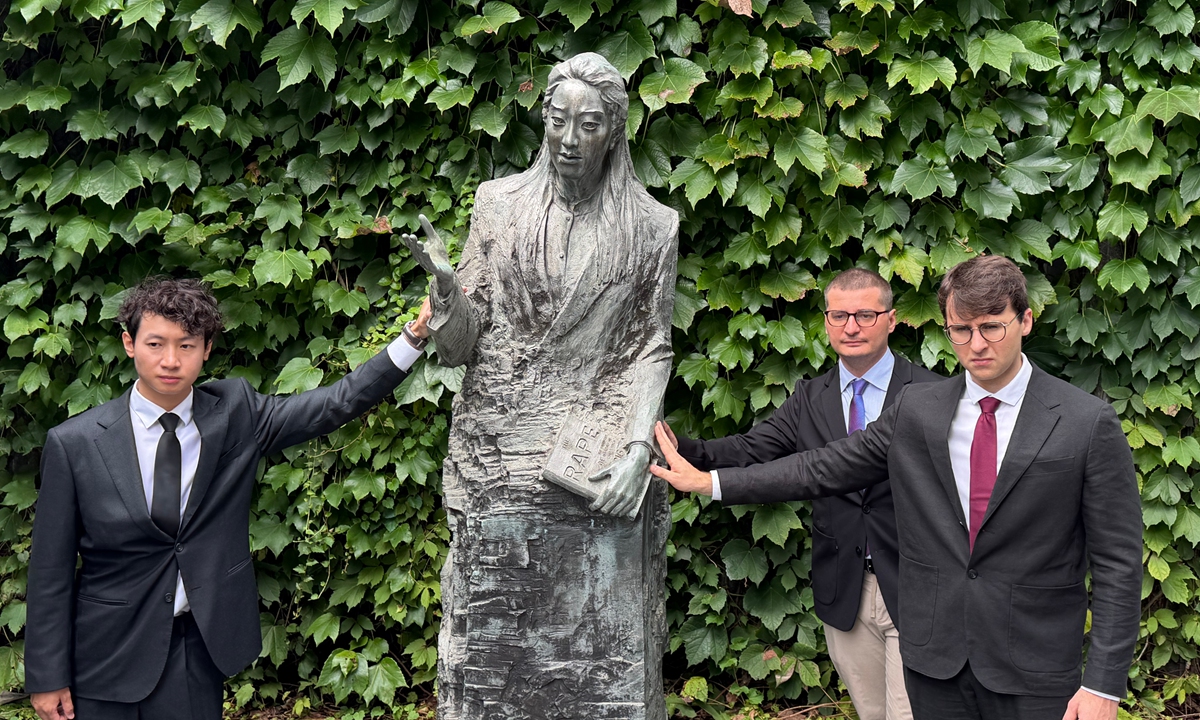
Zhong Haosong (left), Bastien Rata (center) and Marcus Dretz (right) visit the Memorial Hall of the Victims in Nanjing Massacre by Japanese Invaders in Nanjing, East China’s Jiangsu Province, on August 15, 2026. Photo: Shen Sheng/GTAccording to Bastien, the French diplomatic archives brought back this time total 891 pages. They are organized by province and cover wartime historical events in Nanjing, Shanghai, Guangdong and other areas. The archives document relevant situations during Japan’s invasion of China, while also preserving observations by French diplomatic personnel on Chinese society during the wartime period.
Marcus told Global Times on Saturday that, through these archives and related research, they have gained a deeper understanding of the brutality of the Nanjing Massacre. He said that collecting these materials was also aimed at conducting more educational work to help more people learn about this period of history.
The materials brought back from Japan by Zhong include albums of documentary paintings of the Japanese invasion of China by artists accompanying the invading Japanese army, privately taken photo albums of the invading Japanese troops, and original publications from the same period, including the Asahi Shimbun. These materials all come from original Japanese records.
The overseas historical materials were collected over an extended period. Zhong said they contacted sources online and searched through antique and secondhand book channels while continuing to collect materials in Japan.
The new collection on Saturday also includes materials gathered by Chinese youths. High school student Yu Ningpeng and Xu Weizhe donated 12 private letters written by a soldier of the 20th Regiment of the Imperial Japanese Army’s 16th Division, documenting his experiences during the invasion of China. One letter, dated December 20, 1937, contains accounts related to the Japanese occupation of Nanjing.
Meng Guoxiang, a researcher at the Institute for National Memory and International Peace Studies, told the Global Times at the event on Saturday that historical research places great importance on the sources of historical materials, with original archives holding significant value.
Some of the materials donated this time were records left by the perpetrators themselves, while archives from third-party countries such as France provide another perspective, Meng said, adding that cross-checking materials from different sources can help build a more complete body of evidence.
Notably, alongside the handover of the latest batch of archival materials, the memorial hall also held a ceremony to induct the fifth group of inheritors of the historical memory of the Nanjing Massacre. Six people were named as the latest inheritors, including descendants of Nanjing Massacre survivors, descendants of eyewitnesses, and descendants of international friends. They help pass on historical memory through family traditions, educational activities and efforts to raise public awareness of history.
In recent years, a growing number of post-1990s and post-2000s private collectors, as well as foreign nationals, have joined efforts to collect historical materials, a trend that has deeply moved and impressed Zhou Feng, curator of the Memorial Hall of the Victims in Nanjing Massacre by Japanese Invaders, he told the Global Times.
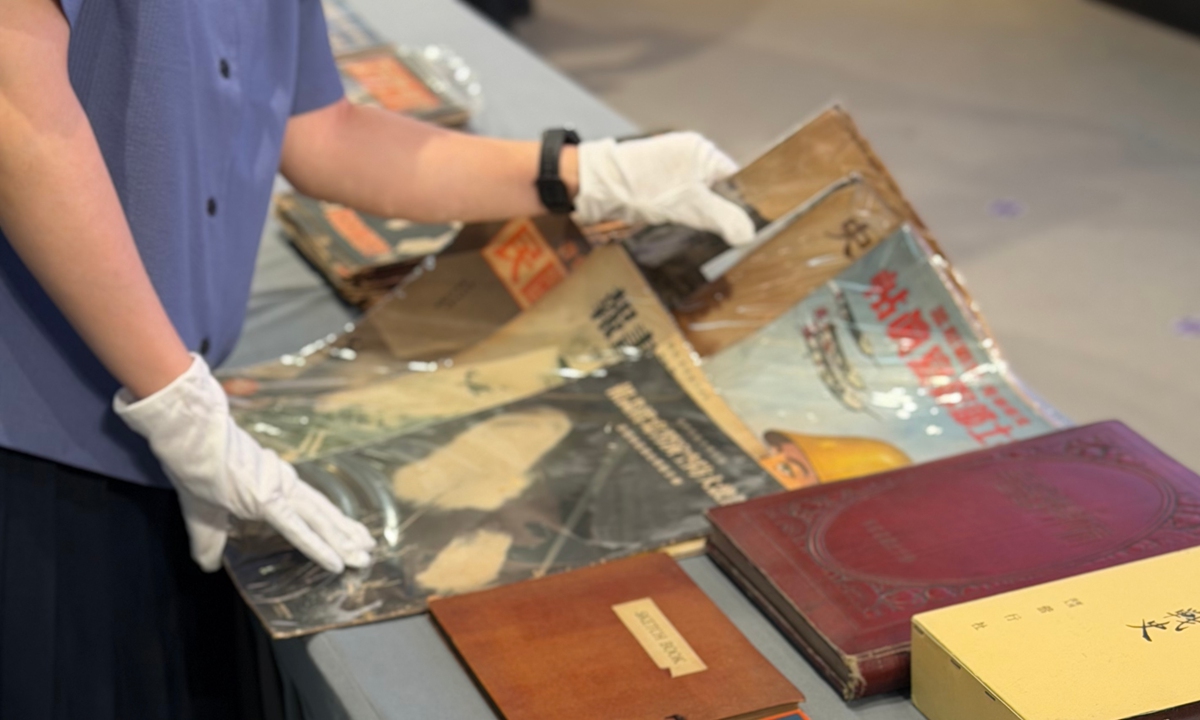
A staff member arranges archival materials documenting Japan’s invasion of China brought back from Japan by Marcus Detrez and others at the Memorial Hall of the Victims in Nanjing Massacre by Japanese Invaders in Nanjing, East China’s Jiangsu Province, on August 15, 2026. Photo: Shen Sheng/GT
Zhou said that preserving history and historical records was once widely seen as the responsibility of museums, cultural institutions and professional scholars; however, today, more and more private collectors are taking the initiative, spending their own money to collect historical materials scattered across China and overseas.
Historical memory, he said, needs to be passed down from one generation to the next. The donors come from different generations, nationalities and backgrounds, but share a common respect for historical truth and commitment to justice.
Since the beginning of this year, the memorial hall’s Nanjing Massacre Documents Center has launched a global campaign to collect relevant historical materials, receiving support from various sectors both in China and abroad. Nearly 100 donors from China and overseas have so far contributed materials to the memorial hall, Zhou said.
。 E X
间充质干细胞外泌体为妇科疾病带来新选择
熊麻吉 | 文
O E
S M
O
1960年11月25日,3位多米尼加女性——米拉贝尔三姐妹被杀害。为了纪念这一事件,1981年7月,第一届拉丁美洲女权主义大会宣布把11月25日作为反暴力日。1993年11月25日,联合国正式发表《消除针对妇女的暴力宣言》。11月25日成为联合国指定的“国际消除对女性暴力日”。

B |
(图片来源于网络)
暴力侵害妇女和女童行为是当今世界上最普遍、最持久和最具破坏性的侵犯人权行为之一。联合国的估计数据显示:全球约有三分之一的女性遭受过身体暴力和/或性暴力,大多数为亲密伴侣所为;15-19岁有亲密关系的少女中近四分之一(24%)遭受过伴侣的身体暴力或性暴力。据统计,我国近90%的家暴受害者为妇女;24.7%的女性曾遭受配偶辱骂、殴打、恐吓、经济控制等不同形式的家暴;受害人平均遭受35次家暴后才报警。

C | 这种暴力对女性健康的影响可能会持续一生。

D |
(图片来源于网络)
如今,女性在社会和家庭中扮演着重要的角色,她们各自在自己的岗位上闪闪发光,她们坚持一切、热爱生活,每个角色都全身心投入完美演绎。而女性特殊的身体构造,导致女性比男性更容易得病。许多疾病对女性和男性都有影响,但有些疾病在女性中的发生率更高,造成这种差异的原因有的是因为生理结构的原因,有的却没有完全明确。
女性高发的疾病大致可以分为三类:
01
生理结构差异仅发生在女性人群的疾病:如乳腺癌、宫颈癌、子宫内膜癌、卵巢癌、阴道炎、子宫肌瘤等。
E |
02
原因不明确,高发于女性人群的疾病:如甲状腺疾病、自身免疫性疾病、骨质疏松症、胆结石、肠易激综合征(IBS)等。
03
某些心理健康问题更偏好女性:如抑郁症、焦虑症、创伤后应激障碍、进食障碍(Eating Disorder)等。

F |
女性生殖系统疾病近年来一直呈大规模上升趋势,2022年全球妇科疾病发病率已达65%以上,而在育龄期妇女中,妇科疾病发病率已超过了70%;全球每年生殖泌尿系统感染的发病数字已达3.33亿人次。
(图片来源于网络)
妇科疾病已成为我国妇女的普遍生理问题,发病率持续上升,且呈现出多年龄层覆盖的趋势。

G | 根据世界卫生组织(WHO)的调查显示,我国有96%以上的已婚妇女患有不同程度的妇科疾病,常见的妇科病发病率在87.6%以上。
// 干细胞外泌体在妇科疾病中的应用前景
”
近些年来,间充质干细胞来源的外泌体在妇产科领域的基础研究也初露端倪,其在促进子宫内膜修复、治疗早发性卵巢功能不全(premature ovarian insufficiency,POI)和多囊卵巢综合征(polycystic ovary syndrome,PCOS)、辅助压力性尿失禁(stress urinary incontinence,SUI)手术治疗及加速阴道手术创面修复等方面均展现出较大的治疗潜能。

H |
目前有研究显示,基于MSC的细胞治疗可有效逆转子宫内膜纤维化并加速损伤的子宫内膜再生,从而改善宫腔粘连的预后,因而逐渐在宫腔粘连分离术后的多种辅助治疗手段中脱颖而出,但其中的作用机制尚未明确。近期的多项研究结果显示,外泌体能够模拟并发挥MSC的功能,有效促进损伤的子宫内膜修复。
(图片来源于网络)
MSC外泌体为女性生殖系统损伤及退行性病变的治疗提供了新的途径,但目前仍然需要更多的基础研究对相关机制进行详尽阐述,以及严密设计的临床试验对其疗效进行审慎验证。
关注家庭暴力,关爱女性健康,保护女性合法权益,营造有利于妇女生存发展的和谐社会环境,是我们每一个人不容推辞的责任。
Current article:http://rqy.ruidunguizanpaorangchongouxia.sbs/68xmi/20260826/4233.html
Published on:00:00:00


